110-113In stock
4 variants
Thick-walled crucibles
Durable thick-walled crucibles in pure high-refractory ceramic. Compatible with gold, silver, platinum. Long-term durability.
from
€5.7
Minimum order: 10 units
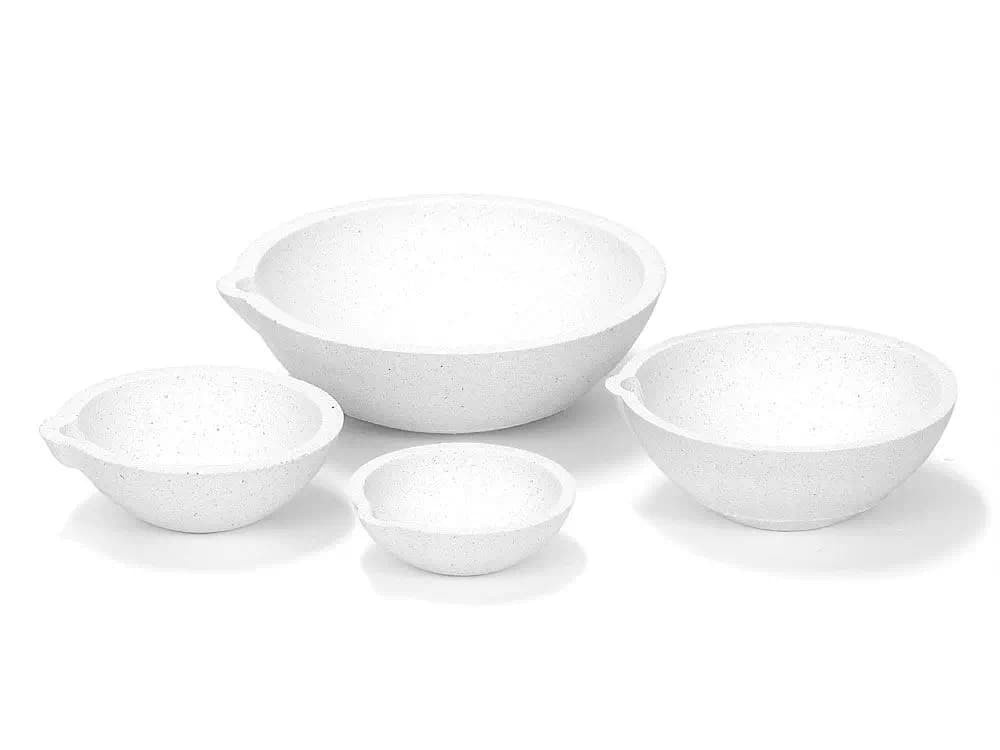
Thick-walled crucibles made from pure high-refractory oxides — aluminium oxide (Al₂O₃), zirconium oxide (ZrO₂) and fused quartz (SiO₂) — for casting and fusion where the thin-walled line would be too fragile. The heavier wall carries the mechanical load and holds heat through a pour, while the all-oxide body contains no carbon at all, so nothing leaches into the melt and the metal stays clean. Recommended for continuous use up to 1600°C and up to 2000°C for short-term use, with full resistance to thermal shock. Four sizes, Nº1a to Nº4a, from 80g to 700g capacity, sized for casting workshops running heavier and more frequent pours than a bench-top hand-fusion setup.
Material
Pure high-refractory ceramic (Al₂O₃ · ZrO₂ · SiO₂)
Temperature
Up to 1600 °C continuous · 2000 °C short-term
Application
Casting, fusion, precious metals workshop.
Durable thick-walled crucibles in pure high-refractory ceramic. Compatible with gold, silver, platinum. Long-term durability.
from
€5.7
Minimum order: 10 units
What makes a thick-walled crucible different from the thin-walled line?
The wall itself. A heavier section takes rougher handling, heavier pours and centrifugal use, and holds heat better through a pour. The ceramic is the same pure high-refractory oxide body — Al₂O₃, ZrO₂ and fused quartz — rated for continuous use up to 1600°C and 2000°C short-term.
What sizes are available?
Four sizes, Nº1a to Nº4a, from 80g to 700g capacity.
Is this crucible built for casting, not just hand fusion?
Yes — the thicker wall is what makes it suitable for casting and workshop use beyond simple hand fusion.
Ceramic or graphite — which crucible should I use?
Ours are pure high-refractory ceramic — aluminium oxide, zirconium oxide and fused quartz, with no carbon in the body — so they cannot carburise the melt. Graphite crucibles conduct heat faster but can carry carbon into the metal, which matters whenever you need the melt to stay analytically clean, as with precious metals.